


Showing posts with label Disaster Management. Show all posts
Showing posts with label Disaster Management. Show all posts
Wednesday, November 30, 2016
Spot contributions to policy paper wins first prize at ITU conference

Sunday, January 4, 2015
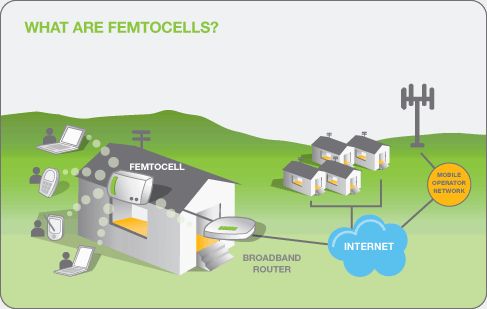
Femtocells (MicroBTS) in support of Emergency Communications
I raised a question with several on-line interest groups: Disaster Management India and Researchers and Disaster Management Professionals and Research. It was intended to understand the real value of the Femtocell (also referred to as Picocell or Microcell) technology in emergency
communications. Has there been a significant uptake of the Femtocell technology in emergency communications?
 |
| Image http://tinyurl.com/oxkclcd |
A small deployment, in a disaster affected area, could serve the public in small batches allowing them to reach their loved one. The Federal Communication Commission of USA has discussed the use of Femtocells as a Public Safety Tech. US telcom operator AT&T supports some mini systems that they use for their own emergency deployments and also offer to emergency management teams. The suitcase size, bigger than Femtocells, AT&T solutions can support 500-1500 users simultaneously. Depending on the bandwidth available they do a decent job, at least with voice.
 |
| Image from EMF Explained Series: http://tinyurl.com/ovjrcot |
Pasquale Pace and Valeria Loscri published on the architecture of OpenBTS as another step forward towards establishing cost-effective Micro BTS solutions. Range Networks has primarily customized the openBTS platform for a Network in a box kind of offering. They have a handful of implementations in various parts of the world: Antarctica, Indonesia, and Zambia. Folks at Daes and Orangee have discussed their practical experience of implementing a OpenBTS-enabled Microcell.
 |
| Extreme arid terrain: http://tinyurl.com/mjg3fgb |
Of cause there are legalities with frequency reuse by an unlicensed service provider. There must be roaming agreements between providers to use the same frequencies in the same area; i.e. multi-carrier compatibility to allow for a femtocell to communicate with handsets from different carriers. It doesn't affect or matter who's at the other end of the line. Government agencies have the authority to overpower those licensing barriers. A Micro BTS setup by a Government emergency service can certainly override those licensing issues. Another option is to offer a set of emergency frequency bands that any authorized service operator can use to operationalize a Micro BTS in the time of an emergency.
The back-haul can simply be a broadband (internet) link to pipe the cellular signal. For example, a VSAT connection can serve as back-haul in a cellular dark area caused by a disaster . However, one must be cautious of the latency that comes along with satellites back-haul. Moreover, it has to have some form of authentication to interface and establish routing of the call in both directions. Establishing a satellite link in between would likely fail because of latency and technical routing problems. Mobile phones require specific performance characteristics that are not one size fits all that can be accommodated by one system.
While Femtocells have certain challenges with operationalizing that are mainly due to policy and regulatory issues, it still is a promising technology for serving the gaps of filling the dark cellular coverage holes in support of crisis response and management.
Acknowledgement
My gratitude to the following people (listed in alphabetical order) for their contribution to the discussion that resulted in this blog
- Donovan Ferguson - National Engagement Manager at Ascom Integrated Wireless
- Doug Hanchard - President at Rapid Response Consulting
- Lane DeCamp - Strategic and Executive Management
- Tapan Roy - Entrepreneur : ICT for Development
[1] Disaster Researchers and Disaster Management Professionals, LinkedIn Group. "Femtocells, who uses them?", consulted on the web: https://lnkd.in/dgBUmcC
[2] Disaster Management India, LinkedIn group. "Femtocells, who uses them?", consulted on the web: http://tinyurl.com/n6oroge
Wednesday, November 26, 2014
Embarking on a study of ICT use in Indian Emergency Communications
 |
| Image is from DownToEarth: http://tinyurl.com/l6tqhpa |
Realizing the shortcomings in the robustness of telecommunications in serving crises the Department of Telecommunications (DOT) of the Government of India and the International of Telecommunication Union are committed to intervene. I am honoured to be granted the opportunity to lead the study in determining the gaps and then recommending best-practices that can be leveraged in improving the Indian emergency communications.
The objectives are:
- Evaluate the current situation of ICT use in Emergency Telecommunications; specifically in the preparedness and response components of a Disaster Management cycle.
- Suggest optimal use of satellite and terrestrial systems to developed redundant stream-less communications by first assessing available ICT resources and processes to effectively meet the challenges.
- Create ecosystems where investments made for deploying telecommunications infrastructures for economic development are also used for disaster response for public safety.
- Challenges to bring in coordinated approach from different government departments, Service providers, private sector, intergovernmental organizations for effectiveness and quick response.
- Recommend any areas that require capacity building, systems development, and procedures for resilience. Thereafter, provide best practices that would support those recommendations.
Thursday, August 1, 2013
APT Manila meeting leading to Sahana Center of Excellence at AIT

The International Telecommunication Union - Development Sector (ITU-D) invited me to present on an "Introduction to Operationalizing the Common Alerting Protocol (ITU-T X.1303) Standard". The presentation was made at the 4th Asia Pacific (AP) Telecommunity on Disaster Management / Communications; held at the SMX Convention Centre, Manila, Philippines, from 23-25 July 2013.
The panel was Chaired by: Dr. Eun-Ju Kim (Regional Director, ITU Regional Office for AP), Mr. Wisit Atipayakoon (ITU Regional Officer for AP), D. Manluz Hazarika (AIT Geoinformatics Center Assistant Director), and myself. The panel topic termed as the "ITU Session".
A noteworthy historic event was meeting Manzul who is affiliated with the Asian Institute of Technology (AIT) Goeinformatics Centre. His presentation was on: Applications of Geoinformatics and Space Technologies for Disaster Risk Reduction (DRR). Besides speaking of CAP, I also spoke about the Sahana Disaster Management Software, specifically the developments of the Sahana CAP Broker. Then we got to talking about ongoing and possible future projects. Our conversation continued at the Ninoy Aquino International Airport, Manila.
The propositions were on combining the AIT Goeinformatics remote sensing and risk mapping technologies with the Sahana Software. The pre-disaster risk mapping exercises would complement the alerting and post-disaster incident reporting. The integrated technologies would offer solutions for Regional Governments and In-line Organizations. That is when I brought up the idea of a Sahana Centre of Excellence at AIT.
The intent of the Sahana COE@AIT would be to foster research and development capacity at the Goeinformatics Centre to provide the essential information management systems and the know how. Manzul and I agreed that we would set sail with this idea and fine resources to make it happen.
Saturday, December 8, 2012
Introducing the Sahana CAP-enabled Messaging Broker to ITU-D Asia Pacific Community
-->

The International Telecommunications Union - Disaster
(ITU-D) conducted workshop
in Thailand, introduced the utility of the Common Alerting Protocol
(CAP) standard,
to the delegates, through a the Sahana CAP-enabled software and a
series of hands-on exercises. The CAP ease-of-use and utility were
appreciated by those delegates. Participants experienced the
efficiency gains of the single entry of a message being
simultaneously disseminated through multiple technologies to multiple
recipients, acknowledged the CAP message consistency removing
ambiguity that may, otherwise, lead to false responses, and realized
the capabilities of brokering multi-agency publishers and subscribers
for improved situational-awareness.
 ITU-D hosted a session on the topic: “Introduction to
Operationalizing the Common Alerting Protocol”
at the workshop: “Use of Telecommunications/ICT for Disaster
Management1”.
This hands-on CAP session was resourceful in producing positive
outcomes. Delegates had the opportunity to assess the capabilities of
the standard using the CAP-enabled Sahana broker software.
ITU-D hosted a session on the topic: “Introduction to
Operationalizing the Common Alerting Protocol”
at the workshop: “Use of Telecommunications/ICT for Disaster
Management1”.
This hands-on CAP session was resourceful in producing positive
outcomes. Delegates had the opportunity to assess the capabilities of
the standard using the CAP-enabled Sahana broker software.
 ITU-D hosted a session on the topic: “Introduction to
Operationalizing the Common Alerting Protocol”
at the workshop: “Use of Telecommunications/ICT for Disaster
Management1”.
This hands-on CAP session was resourceful in producing positive
outcomes. Delegates had the opportunity to assess the capabilities of
the standard using the CAP-enabled Sahana broker software.
ITU-D hosted a session on the topic: “Introduction to
Operationalizing the Common Alerting Protocol”
at the workshop: “Use of Telecommunications/ICT for Disaster
Management1”.
This hands-on CAP session was resourceful in producing positive
outcomes. Delegates had the opportunity to assess the capabilities of
the standard using the CAP-enabled Sahana broker software.
Click to view the workshop report available on the web and the slide deck .
Evidence points to the growing need for a CAP-enabled
ITU-D Module (CAP-ITUM).
The CAP-ITUM would foster the wider-scale adoption of the the CAP
standard and the policies it offers. The ITU branded module would
advance the member states, lagging in implementing CAP, with
facilitating multi-agency all-hazards all-media warning, alerting,
and situational-awareness capabilities, to effectively coordinate
hazard events. Since the first release of CAP in 2005, only a handful
of member states: North America, Australia, and Germany have adopted
the standard. Sri Lanka, an early adopter, has carried out several
research projects involving the standard but has not progressed
beyond with institutionalizing it at a National level. Other member
states have failed to realize the full potential of CAP beyond simply
accepting as an interoperable XML schema.
Monday, November 5, 2012
Closing the voice-enabled disaster communication project but looking to do more
-->

Summary of the VoiceICT4D project outcomes
- LIRNEasia, through a stakeholder forum, advocated the Sri Lanka Disaster Management Center (DMC) to move towards a multi-agency situational-awareness platform by creating a register of alerting authorities and then sharing it's call center and Interactive Voice Response (IVR) system resources for emergency communication.
- The “Do you Hear Me” video, communicating the need for voice-enabled Information Communication Technologies (ICTs), to empower community-based emergency coordination, was visited by 496 viewers, of which 48 or them shared their knowledge on the subject. UNISDR debut film festival on DRR, selected our video as as one of the best three in the category of “best human interest story”
- Peer-reviewed scientific articles presented the realization study evidence emphasizing the practical technical instabilities and deficits in those technologies. The message was news to most researchers and practitioners. IVR-based solutions are gradually gaining momentum.
What next?
A common
consensus by various stakeholders are that the Freedom Fone IVR and
Sahana disaster management system integration must be completed. The
integration would serve non-latin scripting language and lesser
computer literate communities. Moreover, develop an off the shelf
implementable comprehensive crisis management solution that can be
integrated with main stream media or other emergency management
organizations.
There
are three broad emergency communication use cases that were
discovered through the VoiceICT4D activities:
- a radio station would manage a missing persons registry comforting concerned citizens of who are missing and who were found
- citizen journalists would share risk information of incident reports to effectively coordinate and respond to those troubled situations
- community-based disaster management organizations would coordinate their rescue and relief efforts using interactive voice.
The
VoiceICT4D project intends to seek resources to complete the
integration, implement, and pilot the comprehensive end-to-end crisis
management system. The pilot study would investigate the utility and
robustness of such an implementation when applied to the three use
cases above. Moreover, the pilot would consider implementing them in
diverse environments to better understand the adaptability of the
technology. VoiceICT4D would transition from the invention stage to
an implementation stage; where the technology would be field tested
to offer a stable solution to the global crisis management community.
Tuesday, July 3, 2012
Beyond Tsunami Warning in a Vocal Society

The Government of Sri Lanka failed to warn the fishermen of the deadly mini cyclone that lead to 29 deaths. Detection theorist may label this incident as a missed alarm but essentially it is a true alarm with failed actions. There was a lot of finger pointing between agencies for one denying the responsibility over the other. Such a tragic situation could have been over come if a register of alerting authorities with a profile and procedures and a multi-agency situational awareness technology platform had been in place. The DMC held a stakeholder workshop to discuss a way forward.
With respect to incident 2), the tsunami evacuations continued even after the threat was called off, which insinuates a lack of competence. Decision theorist, from the eyes of a Policy-maker's loss function (i.e. government bureaucrats and politicians prospective), would consider this as a success; thus, the ability to warn of any tsunamigenic earthquake. However, from the eyes of Stakeholder's loss function, such as fishermen not going out to sea anticipating a tsunami, the false warning deprive them of a days house hold income.
The Public Lecture was partially funded by the Humanitarian Innovation Fund (HIF) through the VoiceICT4D project. The aim of this action was to strategically address the public at a right time when the message was sure to be heard by those who should hear it. The lecture presented the formula for removing the aforementioned uncertainties. The Director General of the Sri Lanka DMC, himself, was present at this lecture and was appointed the task of moderating this event. His words following the main presentation was “thank you Nuwan this is an eye-opener.”
The public lecture message intended for the Director General and the audience to hear was that the inter-agency rivalry and reduction of false warnings can be achieved through the adoption of interoperable emergency standards along with the policies and procedures that wrap around those standards. The VoiceICT4D project was designed to educate society of the power of voice-enabled technologies and interoperable data standards. A summary of the Public Lecture talks, on LIRNEasia's blog, outlines the key points.
Sri Lankan's, like most other Eastern societies are accustomed to talking to one another over the phone whether it be personal, business, or informing each other of a crisis, more so than text-ing. The video “do you hear me?”, which was produced through the HIF grant, was screened to remind the public and the DMC of the local requirement. Coincidently, the DMC had invested in a call center and an IVR for emergency information collection and dissemination. LIRNEasia has offered to share the lessons learned from it's voice-enabled ICT for Disaster pilot.
Thursday, June 14, 2012
Making Emergency Communication Effective
3rd
LIRNEasia's Disaster Risk Reduction Public Lecture
19
June 2012 15:00 – 17:00
Sri
Lanka Foundation Institute, 100 Independent Square, Colombo 07
Please
join us to discuss how to improve disaster risk reduction practices.
There
is a growing need to dilute inter-agency rivalry and foster lateral
integration for sharing of risk information for effective response.
To that end, the public lecture will focus on actions to improve
alerting and situational-reporting between agencies. Thereby,
reducing the decision-maker's loss functions; namely, reduction of
false and missed alarms, stakeholder losses, and policy-maker losses.
A proven action would be to establish an emergency communication
profile for Sri Lanka and and implementing a multi-agency
situational-awareness software tool. Such a tool and procedures can
help bring organizations together to better communicating risk
information and ease them away from unproductive silo thinking. It
will also allow the national Disaster Management Center to better
regulate those communications.
The
main
speaker
is LIRNEasia's Senior Research Fellow: Nuwan
Waidyanatha.
He has strong
credentials in disaster management, especially with emergency
communication and early warning systems design, development, and
experimentation. His
research is highly regarded and continuously promoted by
international organizations such as the World Meteorological
Organization (WMO),
International Telecommunications Union (ITU),
Organization for the Advancement of Standardized Information Systems
(OASIS)
and the United Nations System for Influenza Coordination (UNSIC).
Additionally, disaster management researchers and practitioners from
the North Americas and the Asia Pacific consult to benefit from his
first hand knowledge in the subject
The
Panelists:
Prof.
Dileeka Dias,
(Director, University of Moratuwa Dialog Mobile Communications
Research Laboratory), Mr.
Mifan Careem
(Chief Executive Officer, Respere Lanka), and Dr.
Buddhi Weerasinghe
(independent Regional Disaster Management Consultant) will complement
the main talk with their contributions in strengthening Sri Lanka's
disaster management capabilities.
LIRNEasia’
s premier CSR activity intended to advance knowledge about good
disaster risk reduction practices in Sri Lanka and the region.
Monday, February 13, 2012
CAP Text not allowed to Speak in USA
The U.S. has banned Emergency Alerting Systems from using Text-To-Speech in broadcasting Common Alerting Protocol generated messages.
Excerpt from the article – Many of those in my community have a hard time understanding the current version of text to speech. In other words, us old folks can’t hear what the computer is saying. There’s also the issue of geographical differences in words. For example, is “soda” and “pop” the same as “soda pop” or “Coke”. If one were to write “I’d like a Coke and fries”, the computer will read that hearer may need more information, ex. “We don’t serve Coke, is Royal Crown Cola OK?”
Here's what I had to say in the LIRNEasia blog relating it to the Freedom Fone and Sahana project.
Friday, December 16, 2011
A nifty way to test Speech-To-Text uncertainties with ITU's Difficulty Percentage measure
In these experiments the LIRNEasia researchers used Freedom Fone Interactive Voice Response (IVR) system. First they conducted a survey with known values for the subjects to pick from. These answers were submitted through the IVR. Since the values were known to the human quality testers, this part of the experiment was associated with a speech-to-text trained system (or a speaker-dependent system or voice recognition type system). The second part involved the subjects submitting data that was not based on preset values. They were free to submit answers to questions as they pleased. This was regarded as an untrained or speaker-independent system.
Emulating Speech-To-Text Reliability with ITU Difficulty Scores
"The results show that with a speaker dependent system 95% of the information could be clearly deciphered opposed a speaker independent system that was only 70% clear (blue areas in Figure 1 and Figure 2). It is not surprising, the outcomes are intuitive. In our study reliability had two components, one was efficiency and the other was voice quality. The voice quality also took in to consideration the Mean Opinion Score and the Comparison Categorical Rating. The researchers wish to acknowledge that their may be disagreements in the sample sizes and number of Evaluators. These results are not ideal for drawing a ‘for-all” kind of conclusion. However, at this realize stage of the research it provides a quick and easy method to draw initial conclusions." ...Click to read full article
Wednesday, July 20, 2011
ITU disaster workshop in Ulaanbaatar, Mongolia
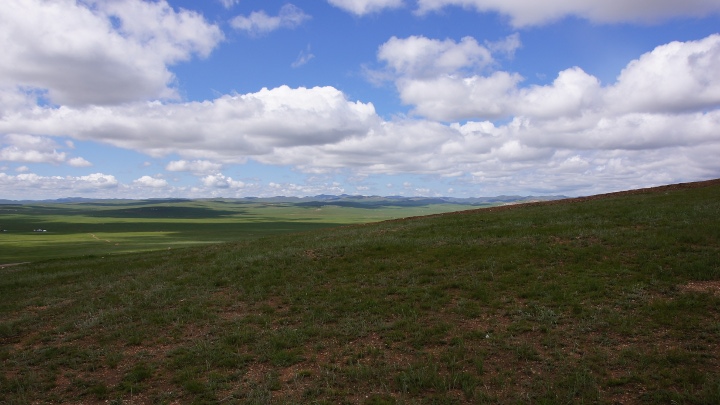
Does this picture remind you of the default Windows XP desktop background? That's what most of Mongolia looks like. Roughly 40% of the Mongolians live in Ulaanbaartar (UB). The rest are sparsely scattered in thinly populated communities in the vast open terrain. The cultures vary across the desert, meadows, and hills. The human to animal ratio is 1:12. The seasonal dwelling is decided on the animals' needs (Mongolia).
Mr. Terbish and I wandered in Bogd National Park, when he explained some of the characteristics of Mongolian nomadic people. Terbish is a member of the the National Disaster Management Committee representing his mobile company: Unitel. His father in-law is a Herder living 300Km west of UB. Father in-law has to search for a cellular signal, like ride the horse to a coverage area to speak with Terbish; then schedule a reconnecting time if a reply is to follow. In the country-side they don't have FM Radio either. To give you an idea of the coverage, mobile operators had setup temporary base stations to give connectivity to the crowds at the Naadam horse races. The horse races took place in the plains about a 2 hour bus ride from UB with a strait race track spanning 25 kilometers.
RIMES project had pilot tested a community-based warning system with motorcycles and horse-messengers to carry the hazard information to the last-mile communities. In the "hazInfo project" simulations we conducted in Sri Lanka, several communities mounted public addressing systems on the hood of three-wheelers (Tuk-Tuks) to relay the message to the village households. It seemed to work well during the simulations but the efficiencies are questionable during a real event as to whether the communities can organize a three-wheeler and a PA system in short notice. Besides earthquakes, all other hazards in Mongolia are hydro-meteorological that are slow onset giving enough time to respond.
I was thinking addressable satellite radios but they are not two-way communication devices. HF radios for data transmission may be another way to bridge the last-mile?
These observations were made during the "ITU Asia-Pacific Regional Multi-stakeholder Forum on Emergency Telecommunications", which was held at Chinggis Kaan Hotel, Ulaanbaatar, Mongolia, 08-11 July, 2011. I presented on our experiences with the Common Alerting Protocol and also submitted a supplement brief that recommends member states to register alerting authorities.
READ MY CONFERENCE REPORT
 |
| Mongolia looking like WinXP |
 |
| 3-6 yr old kids racing 3yr old horses, Naadam 2011 |
I was thinking addressable satellite radios but they are not two-way communication devices. HF radios for data transmission may be another way to bridge the last-mile?
These observations were made during the "ITU Asia-Pacific Regional Multi-stakeholder Forum on Emergency Telecommunications", which was held at Chinggis Kaan Hotel, Ulaanbaatar, Mongolia, 08-11 July, 2011. I presented on our experiences with the Common Alerting Protocol and also submitted a supplement brief that recommends member states to register alerting authorities.
READ MY CONFERENCE REPORT
Monday, November 2, 2009
Emergency communication over Radio Data System proposed to ISIF Asia
I put in a proposal to the 2010 Information Society Innovation Fund - on the concept of extending the information, usually easily available over the Internet, through Radio Data System (RDS) platform; specifically, communicating emergency information over RDS. It is a very small grant and the chances of getting selected are very slim (i.e. chance of 1 out of 20).
Thursday, April 2, 2009
Now a member of Sahana Project Management Committee
The Sahana community included me as a Project Management Committee (PMC) member. My work with Sahana is in the early warning space with the development of the biosurveillance module and the messaging module.
The first Sahana conference took place in Colombo, Sri Lanka during the last week of March, 2009. I made two presentations (biosurveillance and common alerting protocol) and Prof. Samarajiva one (public warning), which stated our (LIRNEasia's) commitment to Sahana.
Sahana has divested from the original parent Lanka Software Foundation and has been incorporated as a foundation in the state of California, USA. Work is still in progress in establishing the foundation.
The first Sahana conference took place in Colombo, Sri Lanka during the last week of March, 2009. I made two presentations (biosurveillance and common alerting protocol) and Prof. Samarajiva one (public warning), which stated our (LIRNEasia's) commitment to Sahana.
Sahana has divested from the original parent Lanka Software Foundation and has been incorporated as a foundation in the state of California, USA. Work is still in progress in establishing the foundation.
Saturday, March 14, 2009
SMS Transport for GSoC 2009
 It is my first time volunteering to mentor students for the Google Summer of Code 2009. The Sahana Free and Open Source Software community has been taking part in GSoC since 2007. This year Google has offered 10 slots to begin with; meaning 10 student will be provided summer funding to develop code for Sahana. There were 34 applicants with project ideas for Sahana.
One of my initial ideas had been to develop a SMS transport that mimics IP where data can be exchanged between a mobile client and a server (database). This is to address the problem faced by emergency coordinators in communicating field data to central levels and receiving information during the response stage of a crisis. Network congestion is a fact during the peak or initial stages of a crisis. Hence, voice channels are the first to shut down. Other means such as GPRS signals are not always up to par and in most cases would be weak in covering remote location that are in the periphery of the footprint of cellular towers. However, SMS that works on weak signal strength, a store-and-forward communication technology, even though may not send the information in real time, would eventually get the data across to the terminal devices.
Presently Sahana, a web browser application, reliant on Internet connectivity for data exchange, is developing a class of mobile phone and personal data assistant hand-held device applications to operate in the field. These hand-held devices are handy effective tools in data collection and reception. Although GPRS exists as means for providing connectivity, given the question on reliability, it is important that a redundant or alternate channel for transferring information is in place, if Sahana applications are to be effective across available communication network platforms.
The problem that this project promises to solve is to develop an SMS transport layer that can communicate with the Sahana applications during times of need. This proposal outlines the goals and design of the envisaged software object that will work as a general protocol to support all Sahana modules for networking with hand-held terminal device applications.
The Sahana community has definitely selected the student who has provided some original ideas and proven skills to develop the client and server side components. Some aspects that the developer must keep in mind are compressing the strings to minimze on SMS tariffs are multifold relative to GPRS, sequencing the SMS pages to ensure they are chained back at both server and client sides. Some thoughts such as use of binary XML has been suggested to structure the server calls or client requests and data exchange between the Sahana clients and Sahana servers.
I'm excited to mentor the student in developing this component as part of GSoC2009 for Sahana.
Subscribe to:
Posts (Atom)