Wednesday, July 20, 2011

ITU disaster workshop in Ulaanbaatar, Mongolia

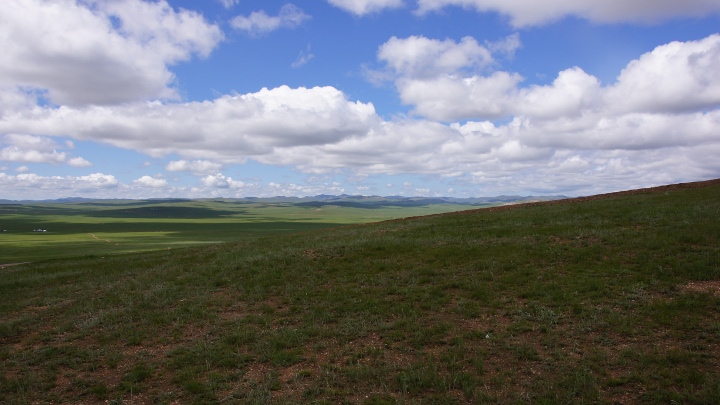
Does this picture remind you of the default Windows XP desktop background? That's what most of Mongolia looks like. Roughly 40% of the Mongolians live in Ulaanbaartar (UB). The rest are sparsely scattered in thinly populated communities in the vast open terrain. The cultures vary across the desert, meadows, and hills. The human to animal ratio is 1:12. The seasonal dwelling is decided on the animals' needs (Mongolia).

Prairies of Mongolia
Mongolia looking like WinXP
Mr. Terbish and I wandered in Bogd National Park, when he explained some of the characteristics of Mongolian nomadic people. Terbish is a member of the the National Disaster Management Committee representing his mobile company: Unitel. His father in-law is a Herder living 300Km west of UB. Father in-law has to search for a cellular signal, like ride the horse to a coverage area to speak with Terbish; then schedule a reconnecting time if a reply is to follow. In the country-side they don't have FM Radio either. To give you an idea of the coverage, mobile operators had setup temporary base stations to give connectivity to the crowds at the Naadam horse races. The horse races took place in the plains about a 2 hour bus ride from UB with a strait race track spanning 25 kilometers.

Naadam Horse Races
3-6 yr old kids racing 3yr old horses, Naadam 2011
RIMES project had pilot tested a community-based warning system with motorcycles and horse-messengers to carry the hazard information to the last-mile communities. In the "hazInfo project" simulations we conducted in Sri Lanka, several communities mounted public addressing systems on the hood of three-wheelers (Tuk-Tuks) to relay the message to the village households. It seemed to work well during the simulations but the efficiencies are questionable during a real event as to whether the communities can organize a three-wheeler and a PA system in short notice. Besides earthquakes, all other hazards in Mongolia are hydro-meteorological that are slow onset giving enough  time to respond.

I was thinking addressable satellite radios but they are not two-way communication devices. HF radios for data transmission may be another way to bridge the last-mile?

These observations were made during the "ITU Asia-Pacific Regional Multi-stakeholder Forum on Emergency Telecommunications", which was held at Chinggis Kaan Hotel, Ulaanbaatar, Mongolia, 08-11 July, 2011. I presented on our experiences with the Common Alerting Protocol and also submitted a supplement brief that recommends member states to register alerting authorities.

READ MY CONFERENCE REPORT
Wednesday, March 2, 2011

Real-Time Biosurveillance Pilot - Technical Report

The Real-Time Biosurveillance Program (RTBP) was a multi-partner initiative to study the potential for new Information and Communication Technologies (ICTs) to improve early detection and notification of disease outbreaks in selected regions of Sri Lanka and India. Experts in the field of biosurveillance and health informatics have argued that improvements in disease detection and notification can be achieved by introducing more efficient means of gathering, analyzing, and reporting on data from multiple locations. New ICTs are regarded as an important means to achieve these efficiency gains. The primary research objective of RTBP was to examine these claims more closely by producing evidence to indicate in what ways and to what extent the introduction of new ICTs might achieve efficiency gains when integrated with existing disease surveillance and detection systems.

The project achieved a number of key objectives at the outset, including the development of a Java-based application for collecting patient data using low cost mobile phones; the successful implementation of Auton Lab’s analytic software and T-Cube Web Interface for analyzing patient records and near real-time prediction of disease outbreaks; and the adoption and implementation of Common Alerting Protocol for multi-channel health alerting. Moreover, the project team successfully integrated each of these three key components into an operational system that collected individual patient records, over 330,000 in Sri Lanka and over 130,000 in India, over a 15 month course of study. Over the life of the project, the system identified over a dozen instances of potential disease outbreaks, with four of those (Chicken Pox, Acute Diarrheal Disease, Respiratory Tract Infection, and Mumps) being confirmed by health authorities. The project demonstrated that new ICTs can dramatically reduce turnaround time for outbreak detection and alerting, from current period of weeks to a matter of days or even hours. The project also demonstrated the feasibility of using low cost mobile phones and existing commercial cellular infrastructure and services to enable affordable, real-time reporting of patient records from frontline health centers.

Overall results from our work demonstrate the feasibility of introducing an RTBP from a technical and operational standpoint. Initial findings show significant efficiency gains in terms of disease reporting, outbreak detection, and health alerting; with cost savings over 35% in both countries when compared to the existing systems. However, further research is needed to better understand the challenges associated with scaling such a system up to a regional or national level of implementation. In particular, further work needs to be done to optimize data entry over low cost mobile devices, to address usability and training requirements for the analytics platform, and to continue to enhance and integrate health alerting into national and regional systems and practices. Moreover, extensive stakeholder consultation will be necessary to ensure the various policy, legal, and operational implications of a national or regional RTBP are better understood, addressed, and effectively managed in the future.

It was a tiring and exciting experience but helped towards change adaptation whereby health professionals in the respective pilot countries were exposed to new ways of public health maintenance. I am delighted to have developed the proposal, gotten funding, and directed the project in achieving in terms of important empirical findings on the usefulness of this type of system, as well as achieving impressive outcomes around the greater adoption of the RTBP.

This project was made possible through a grant from the International Development Research Center of Canada. This project recently ended in December of 2010. This blog is to share the final technical report with researchers and practitioners.

Click to view the Real-Time Biosurveillance Program Final Technical Report.

Tuesday, December 14, 2010

mobiles in support of Sentinel Site Surveillance

Sentinel Site Surveillance procedures are a popular public health practice in many countries, including Sri Lanka. Priority health data communication, case site investigations, and statical reporting are the key preliminary operations. The present day paper based procedures do not provide the much needed timeliness in completing these tasks.
The Real-Time Biosurveillance Program (RTBP) is a pilot project designed and lead by LIRNEasia. The pilot which ends in December 2010 showed promising results to the extent that the Wayamba Provincial Director of Health Services (PDHS) has expressed interest in scaling the project from a dozen hospitals to all fifty hospitals in the pilot district, with the aim of nationalizing after studying and rectifying the scalability issue. The mobile health software developed for the project was a simple application that digitized the optimal set of outpatient and inward data: case date/time, location, gender, age-group, disease, and syndrome. However, it was not designed to address the standard operating procedures of the legally mandated surveillance and notification.

Now the RTBP project is looking for external funding to enhance the RTBP developed mHealthSurvey mobile phone software to adapt to the functional requirements of the Sentinel Site Surveillance program. This would require adding some logic in to the mHealthSurvey or other to capture the H544 attribute information if the patient record is a notifiable disease. One option we are looking at is using OpenRosa XForm technology to make this adjustment.